Any comments on the blog, propositions (legal, of course), ideas for places for me to go see, please get in touch at thebarbiographer@hotmail.com and don't forget to follow me on Twitter

Sunday, 30 March 2014

Hyde


Hyde, 9-17 Partick Bridge Street, Glasgow G11 6PN

It took a while but Hyde Bar and Restaurant, at Partick Cross, and its ambitious terrace have finally arrived. The stop-start nature of its development even caught me out but now it is here to be enjoyed.


Planning a forthcoming London trip it soon became obvious just how many pubs, clubs and restaurants have custom-built smoking/sun terraces. Glasgow has only a handful of venues that have gone out of their way to construct semi-covered areas where one can sit outside for as long as one feels, smoking or not.

That is one of the reasons I shadowed the progress of a development down the Partick end of Byres Road. From the beginning of its planning, the terrace was both a key part of its publicity and its aims as a venue. The phrase “south-facing” has never been more relevant for a Glasgow bar.

Despite the nearby presence of The Three Judges and Butterfly & Pig the imminent arrival of Hyde on Partick Bridge Street seemed like a step into the unknown, a claim staked on virgin territory. I looked forward…

And waited. The weeks became months as progress stalled many times. So long, now, that I can’t even remember if it was two or three years ago. Facebook profiles, blog mentions, street rumours and recruitment drives all supposedly heralded its arrival but the actual construction failed to keep pace and then ground to a halt. Another dream that ended, so it seemed.


Then, some two months ago I was passing and noticed work had begun again. Inside as well as out. I stopped and peered in an open door. A young bloke in a hard hat was working. He caught my eye. I turned to go.

“Can I help you?” he enquired. More of a statement than a question. In an Eastern European accent.
“No,” I replied quickly and moved to go. In two or three steps he was beside me, his expression blank. Perhaps he thinks I’m from a rival operation, I thought. Or even an opportunistic thief?

“Just having a look,” I said cheerily, “nice place!”
“Yeah?” His tone remained defensive. I nodded, thinking of what I could say next to defuse the situation…
“You think so…?” A smile grew. “I designed it all. Everything.”

I nodded, while inwardly doubting his story of a multi-skilled 19-year-old assuming control of the interior design, civil engineering and architecture of a six-figure project. But I applauded his chutzpah. Again inwardly.

Before I did actually leave he showed me the width of the place, at least double the amount of frontage I had expected, and assured me it would be opened within 10 days. My scepticism was again warranted as that time came and went.


Some time later, during a long shift of my second occupation - The Muse’s driver, she shouted as we sped like light through Partick Cross. I didn’t turn my head, even for an instant, so used am I to her outpourings of passion but her utterance contained a word I knew that made me pause – my thoughts, not my pressure on the accelerator.

She had said “Hyde!” Now, my second thought concerned that outstanding international arrest warrant I may have mentioned in an earlier blog but where was there to obscure myself if danger was imminent? So, I reconsidered and remembered the mythical opening promised for so long.

“What about it?” I asked as nonchalantly as I could.
“It looks like it could be open.”
I paused. Gulped quietly. “Nah, can’t be…”

Much later that night I heard the door crashing open. Must have been after 3am. The chuckling came later, around ten seconds later. That was the last I heard before the morning. Two jobs are tiring.

And in that morning The Muse was triumphant. She and her lady friends had been some of the first to enter its doors. While I had snored. The irony was huge. But I swallowed it with grace and smiled while she described the interior.

Cream banquettes. Black banquettes. Elegant booths upstairs. Vodka. The mezzanine. The partially-bricked wall. Vodka. Splashes of red here and there. Eclectic pieces of furniture. Gin. Innovative lighting. She went on and on…

As much as anything else, to stop her I said, “I NEED to go.” She looked at me as if I’d just suggested we move to the Crimea.


But I have managed to go. On three occasions at different times of day and night, for flavour. It is looking promising. Unlike many new bars this place actually needs the large windows. To do the interior justice and to allow its scale to be appreciated.

Other than that observation it is hard to pin down a stream of thought behind the look and this is not here a bad thing. An indulgent mish-mash you could call it. Normally this is a minus but not for Hyde. Because it is an attempt to create something that is good and pleasing, not just something that will work. A subtle difference and it shows a commitment often lacking.

The Muse hadn’t mentioned the smaller upstairs bar. It has the feel of a more private gathering, while the adjacent gallery booths allow you to overlook the main lower area, which has a gothic appearance that should have been continued upwards instead of the industrial grey ceiling and girders.

A minor error that may be offset by the intriguing wood-panelled approach to the restaurant in the south of the building, off of which are various doors to toilets and staff areas.

And if you are looking for the best area to ensconce yourself for a long stay, I’d say take the recessed seating under the mezzanine. A good place for planning and scheming while sipping and sighting.


Cocktails are now de rigueur for any new opening and Hyde, at least swerves from the norm with items such as the Hyde Breakfast Martini and the Daisy de Hyde. More notable still are the craft beer cocktails – variations on a theme, topping up traditional cocktails with various beers. Try the Pamlpehyde Caledonian.

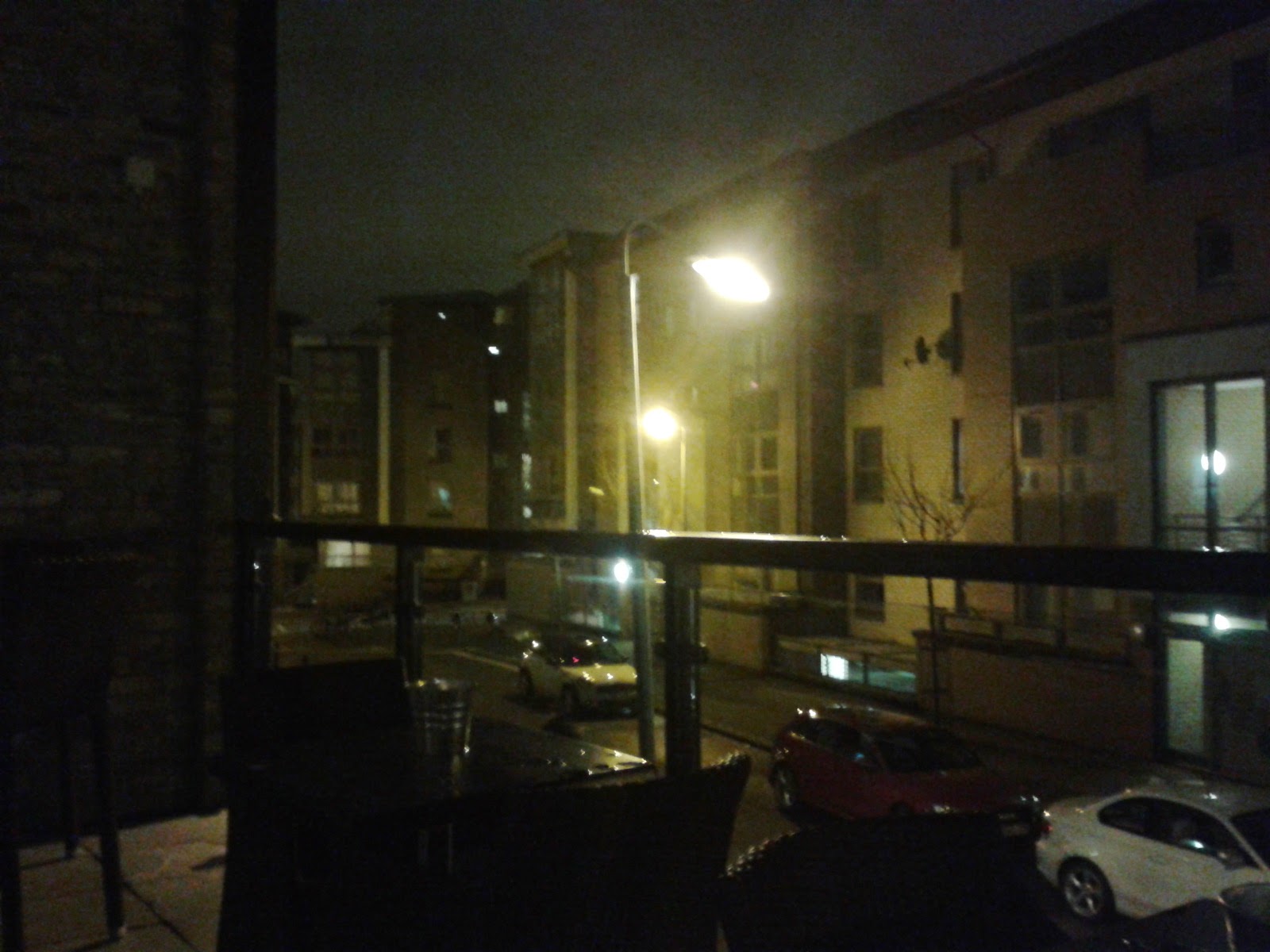
All of this without yet mentioning the sun/smoking terrace – Hyde’s USP. Simple but elegant furniture comprising half a dozen tables and chairs will allow a good few to enjoy what could be the best elevated bar view in Glasgow, rivalled only by the rooftop vista of 29/One Up.

If the sun shines I can see one having to get here early for a seat and who knows whether the owners will allow standing drinkers on the terrace. Should such problems arise then it is a good sign for the bar whether business is guaranteed by crowd-drawing food, pre-Sanctuary clubbers, casual afternoon visitors or Hyde proving to a be a night-time draw by itself.

Successful or not, features such as the terrace will keep me coming back as regularly as time and other bars allow.


Friday, 28 February 2014

Two Stirlingshire Inns - The Gargunnock Inn and The Drymen Inn


The Gargunnock Inn, 6 Main Street, Gargunnock FK8 3BZ
The Drymen Inn, 5 Stirling Road G63 0BW

Mostly, it’s the biggest mouth that has the least to shout about. In these days of intense promotion, social media, multiple media platforms and barrels of bullshit this truth is easily overlooked.

The Drymen Inn in the village of the same name opened a couple of years ago with much noise. Marketing, some people call it. I call it waffle. But all new establishments believe they have to do it.

However, they should put the first things first, ie run a decent establishment with good booze and food, sympathetic service and high standards of cleanliness. Success flows, mostly, from these essentials not a clever social media strategy.


The large windows of the inn are the thing one notices initially. I sigh when I see them, because virtually every new pub or restaurant deploys them but most people are probably quite impressed by the huge expanse of glass so we can ignore my input as being unrepresentative.

What we couldn’t ignore was the state of the glass when the Muse and I last visited and sat in the conservatory section. Noticeably smeared and streaky. You can forgive condensation because that can appear despite your best efforts but the mess here was down to a basic lack of care. And the adage of a joint only being as good as its worst cleaner was proven.

And, sadly, this neglect continued on the tables and the floor, with crumbs everywhere, accompanied by dirt and, presumably, animal hairs. We had planned to order food but after seeing this mess we limited ourselves to drink.

This slovenliness is disappointing because it detracts from the eclectic interior that has various sections of interest including a wood burning stove and stone pillaring. It manages to achieve that sought-after amalgamation of contemporary and rural with a fair degree of style. Even if there is a slight flaw in layout with far too much room behind the bar itself. Maximise punter space, designers!


So, despite the bad start to our visit we gave the Drymen Inn a second chance. Because of the decent interior, the attractive outdoor furniture and…well, that’s the kind of people we are – exacting but fair.

But, eventually, we couldn’t ignore other faults that appeared. The service was friendly enough but disinterested. As if they weren’t really bothered if we were there by the window or not. Even when I came to settle our bill.

At least we had each other to talk to but the single man sitting at the bar could have done with some chat but the two bar persons were too busy talking to each other and then with a couple of other off-duty colleagues who appeared halfway through the afternoon.

And while I waited to pay I noticed the large glass gantry of their premium drinks. Not appropriate, I feel, for a rural setting and it hints too loudly at profit margins.

We left a little deflated. A joint not living up to its billing as the flagship pub/restaurant in a village dear to us – we exchanged our vows only two hundred yards down the road.


A village we know less well, just ten miles to the east is Gargunnock. Its eponymous inn has been operating for hundreds of years, its profile reflecting the modest size of the local population and the village’s fair distance from Glasgow.

It is far nearer to Stirling. The main road to that city, the Gargunnock Straights, was known for being the proving ground of boy racers as they displayed their bravado by nudging speedometers higher and higher. Perhaps they still do.

If you enter from Main Street this is the original inn, part of a row of whitewashed buildings dating from the 1600s. The pub/restaurant of today has extended back to more than double the original space creating a long, thin layout.

This interior has no less than four different sections, all interesting. The front (if it is the front) is two old rooms with a real fire. Sitting here you can easily imagine the centuries rewinding - you’ve just arrived after a long coach trip or handed your horse over to the groom to take it to the stables, while you warm yourself and look forward to a hearty stew and a warm(ish) bed. Serving wenches are optional.


Further in is the first bar area complete with dining tables. Here they serve good food, simple pub grub but done very competently. The kitchen hatch is on one wall for those of you who like to feel close to the chefs while they work.

The third area is a hall with another fire and comfortable seating and off this is the public bar, which includes another bar counter, jukebox, and pool table. Perfect for a more relaxed afternoon or evening drinking a session lager or 13. While the hall is more the place for after-lunch/dinner coffees and the newspapers.

Beyond the hall is the back door leading to the sizeable car park. When you look at the inn from there it appears to be the front, perhaps being the entrance that most locals use? And they do use this place very regularly. As they should. It deserves their custom and that’s the best you can say about a pub.

The present owners, the Bedwells, have continued the good work of their predecessors maintaining a place that gives credit to its village, and I’m sure that won’t change, no matter how loudly they shout.

Friday, 31 January 2014

2014 And All That


2014 AND ALL THAT

In this big year for Glasgow and Scotland with the Commonwealth Games and the independence referendum, here’s a look at these events and their impact upon the nation and the licensed trade.


This piece began a few weeks ago on the rural back roads of Northern Ireland. I was lost, it was raining and my recently re-heeled boots were somehow letting in. The car and my companions, including even The Muse, had abandoned me an hour earlier as I insisted on finding an elusive and secluded watering hole of yore and of some repute.

I had mislaid the directions received from a bloke on the ferry from Cairnryan but I was determined to find this place, even if it meant getting wetter and colder and the roads/lanes getting even narrower.

At a bend, just under an arch of dripping ash trees, something struck me. No, nothing solid. Nothing automotive. A thought. More than that. An internal command. Stop searching for the past. Look ahead.

Simple. Straightforward. And it is an easier action, really. We’re made to look forward, our heads face that way. Yes, there is comfort in the past but it is often illusory and involves a re-writing of one’s history. So, while in this progressive state of mind there is no option but to examine 2014 and its promise.

It could be a big year, so they say. The biggest in 300 of them, or 700 if you look at it another way. Aye, the Referendum. This is not the forum to discuss it other than to observe that in 1707 the Parcel of Rogues sold Scotland for money and now, according to latest research most of the population would “sell” or “buy” independence merely on how it affects their pocket. No mention of national pride, self-determination, or allegiance to past martyrs to the cause. Very sad.

And Glasgow hosts the Commonwealth Game, meaning it has its hands on the biggest sporting event here for… er… 28 years. Put that way it doesn’t sound as impressive, does it?

We have been told that the Games will benefit the city in many ways. The health of the population will drastically improve, world status will be bestowed, total East End regeneration will occur and tourist money will pour in - in trillions. That’s it. Nothing more than those pretty modest objectives.

Six months from takeoff and even those limited ambitions look, well, ambitious. Agreed, Glasgow will receive more global attention than in a normal year but with the status of the Commonwealth Games as a whole diminishing and its very continued existence placed in real recent doubt, a well-funded and imaginative marketing campaign could have achieved that increased attention on its own and at a far lower cost.

Glasgow has a record of relatively successful self-promotion from innocent efforts such as Glasgow’s Miles Better to morally dubious re-brandings such as The Merchant City. There has been a too heavy emphasis on high-end retailing as if Buchanan and Ingram Streets can be enough to drive a whole city while the rest is neglected. Meanwhile, aspects of our culture that didn’t quite fit with Glasgow’s shiny remade image, such as our traditional pubs, were neglected or purposely sidelined. Glasgow and Scotland do bars and hospitality well, yet the powers that be felt that our drinking culture should be hidden and certainly not celebrated.

Things may have improved since politicians finally realised that alcohol “problems” were fuelled by home drinking not in pubs and clubs but I have yet to see a decent, coherent, campaign promoting Glasgow licensed venues during or before the Games’ build-up.

In this absence I’m intending to do my modest best with a couple of ideas to help the still-beleagured industry. Watch this and related web spaces.

As for East End regeneration, Dalmarnock, the district with the most Games’ building work, has been eviscerated leaving wide-open spaces adjoining the massive new arenas. Some of what has gone is no great loss but the local community have lost a number of amenities and have to travel to Bridgeton for essentials such as a Post Office.

The Emirates Arena and Chris Hoy Velodrome (yeah, the same Chris Hoy who, with impeccable timing, retired just before his “home” Games) are to be used by the public after the Games but charges will have to be reduced before locals can experience them. And the Athletes’ Village ability to form housing after August may have been compromised by the, allegedly, cheap plumbing.

The tourists will need places to eat and drink while in the East End but – correct me if I’m wrong – no new cafes, restaurants or pubs have opened. The pub bit isn’t surprising when you remember the council’s restrictive policy on new licences. Meanwhile, the restaurant owners in the Merchant City lick their lips at the thought of inflated takings. Not to mention the hotel chains poised to raise their tariffs by percentages running into the thousands.

Money will be come, undoubtedly, but to the wrong people. To the same people as before. Rebirth of neglected areas will be stillborn without a radical midwife, prescribing redistribution. Not only financial, but of opportunity – educational and social.

And there’s more sport… A golf event up in leafy Gleneagles in which some generous people have volunteered their labour to help out holding scoreboards, raking bunkers, corralling the crowd… wait, I hear they are having to pay for the privilege. Paying to work?! Run that by me again. They are paying to… Alongside the 24 golfer millionaires who won’t pay for a thing.

But it’s not all doom and inequality. I look forward to new bar openings such as Hyde (wait a moment, I mentioned this last year too) with its daring sun terrace, one of the very few that have been purpose-built. And any other new pubs that are similarly exciting or do something a wee bit different.

I continue to hope that we allow ourselves to celebrate our drinking culture and tradition instead of our usual self-flagellation and that pride in what we are translates into a burgeoning hospitality sector for Scots and tourists to enjoy, whether this September sees independence or not.

And on that fateful day and night I have another choice to make - other than the private one in the polling booth – the bar to pick in which to celebrate the new age or drown in sorrow.

Friday, 20 December 2013

The Butterfly and the Pig (West) and The Bank Street Bar Kitchen


The Butterfly and the Pig (West), 2 Partick Bridge Street, Glasgow G11 6PL
The Bank Street Bar Kitchen, 52 Bank Street, Glasgow G12 8LZ

Can The Butterfly & The Pig (West) and The Bank Street Bar (Kitchen and Café) succeed where many others have failed in two tricky Glasgow locations that have never yet been the scene of successful pub operations?

It is a perennial topic on this here blog – is location the key to a bar’s success? Can experienced operators buck previous form for unpopular addresses? Two bars that have opened fairly recently will answer these and related questions by their progress this year and the many (hopefully for them) to come.

The Butterfly & The Pig, was one of the venues that transformed Bath Street from a stretch of city centre offices into an entertainment districts. B&P’s kitsch interior and miss-matching crockery has been much imitated and seen by some as a major trend setter but this humble reviewer actually preferred the bar before it, Spy Bar, despite the silly name.

But now, following the precedent of Bar Soba replicating a city-centre name in Byres Road, B&P has taken over the troublesome site at the very bottom of the same street. Specifically under the modern flats built around 15 years ago on ground most famous for the Volcano nightclub, a favourite west-end last stop for the reasonably trendy and a notable location in the shooting of Trainspotting.

Whites/500 Club was the first to fill the commercial unit beneath the expensive residences and for a while they prospered on a pre-club crowd mostly heading for the, then, Boho. That nightclub, however, continued for a lot longer than the bar here. It closed in the early 2000s and since then a variety of operators have tried their luck, the most ambitious being craft beer purveyor, Bruadar. It too closed despite (or because of) its earnest intentions.

The B&P are probably a more hard headed bunch, and less interested in the niceties of craft beers. More footfall, branding and adding value through food. And the branding part means that you get the B&P look merely stenciled onto the canvas that was an empty bar.


It’s the kind of interior that your wealthy great aunt would inflict on every room of her substantial flat, commemorating past familial generations, as far back as Edwardian, with layers of different styles of furniture and fittings. Or, perhaps, the waiting room of an eccentric notary who has decided to be left behind by the 20th and 21st centuries.

All very charming and appropriate, maybe, for the basements of the elegant Victorian sandstone terrace of Bath Street, not so in a modern building of brick and large windows. No, this context requires a brushed steel counter, the very latest in drink dispensing, clean lines and even some glitz - of the knowing kind, of course. And you could add in some splashes of fabric for warmth.

Lack of warmth is something you experience in the basement toilets here, the un-insulated nature of this area has always been the case but now it seems to have crept upstairs too, I just couldn’t get comfortable no matter where I sat but the coldest part of all was the strange raised area in the corner. It looks and feels more like a place of interrogation than of pleasurable imbibing.


The money behind B&P means that it will last for a while even if the takings are low but eventually we will find out if its incongruity will outweigh the trade it gets from dedicated but undiscerning brand followers.

Number 52 Bank Street has an even longer history of failure than number 2 Partick Bridge Street. Joe’s Garage, a licensed restaurant reasonably popular with GU students partial to a cheap burger, was there from at least the late ‘80s but it has been gone for at least a decade and a half.

Since then? Nothing really. A few eaterie attempts failed despite plenty of effort, I’m sure. The difficult nature of the site prevailed. But why exactly? Parking isn’t ideal on this corner but a lot of establishments have awkward access.

At the time of Joe’s Garage there were no actual pubs nearby – apart from the GU union – but there was a curry house and a pizza/pasta joint. Now, Stravaigin and The Left Bank are long-standing Gibson Street fixtures perhaps making the area ripe for another settler.


The Bank Street Bar, Kitchen and Café lets you know what is on offer. Booze, grub and… coffee and tea. You would think that all these delights are under one roof, so to speak, but no, the café is separate from the bar/kitchen and is of the traditional Glasgow sort.

The bar is a split-level affair with the upstairs tables a decent option because the large windows afford a view outside. The overall interior is white and bright with a modest counter area and gantry. Quite fresh in feeling and not lacking in quirks due to an interesting variety of light fittings. There is exposed brick and beam but we won’t hold that against them. One word of warning – don’t sit in the leather couch in the left corner if you intend to make it a short visit - easy to get into, hard to escape from.

That they’ve done well on a small budget is apparent in the limited menus. Probably the smallest range of wine and spirits I’ve seen in a while and the food is basic, with burgers taking prominence, just like at Joe’s Garage. None of this may matter as they are going, I believe, for the student market. Let them go for it.

A success here may push the Gibson Street Quarter towards that point where it attracts further interest and becomes the next Finnieston. Depending, of course, on the Licensing Board. Their role is central in all aspects imbibing. With a more enlightened attitude popular areas could respond to demand and adventurous sorts could open completely new bars in areas that could do with a boost. And the question I posed at the beginning of this blog would become redundant.

Tuesday, 26 November 2013

Amsterdam


Amsterdam offers hedonists a place where they can indulge in safety, relatively free of state intervention. Even the humble alcohol user can have extra fun here. The Dutch are very proud of their traditional pubs, the legendary brown cafes, and once you’ve visited you’ll see why.


Northern Europe, not the Med, offers the closest thing to British drinking habits you’ll find anywhere. Maybe the Costas’ pubs provide an even more home-from-home experience but those are expat bars so can’t count.

Amongst those countries - Germany, Scandinavia, Poland, even Belgium – Holland is the neatest fit. They even go big on darts, for fuck’s sake. So, for an urban pub-goer seeking a holiday where bars are not only at the centre of the fun but in which the culture is understandable straight from one’s arrival in the city, Amsterdam is as good a destination as any. And it has a distinct advantage over the UK in the way it describes its pubs as I will explain later.

I’ve now been four times, thrice BBB. Eventful trips involving a mugging, hallucinations, disorientation and a near drowning. This time was a safer experience but not without its pleasures.

Concentrating on the Nieuwmarkt, Red Light/Medieval Centre and Jordaan areas one finds a density of drinking venues unparalleled in a working city of this size. Everything is crammed in but in some style. The historic economic necessity of remaining compact creating beauty and practicality today. The countless canals just further reduce the space.


Amsterdam isn’t afraid of its past and its bars show this. The Golden Age of the 16th century during which those canals were constructed is celebrated in pictorial form in many pubs including our first stop Café de Dam – an ordinary wee place near Dam square. A tableau depicting Amsterdam as a hub of sea-borne trade, with countless sails billowing at every corner of the city.

A very typical pub this with a small, dark wooden interior. Every feature narrow from the frontage to the incredibly steep stairs up to the toilet. I met a Dutchman struggling upwards as I was about to descend. “Great stuff!” he exclaimed and I wondered how long he had held that phrase before using it.

This, the oldest part of the city is chocked with such little pubs. All worthy of a wee drop in. Less so are the ones that are so anglified you would think your North Sea ferry went right at Dogger Bank. We experienced a couple, by mistake, Café Trinity and the Old Sailor Bar. Just as swervable are the Irish pubs that appear here as they do in every city centre across the globe. Don’t go in. Do something different.

That ‘different’ could well involve any number of other drugs – look at the picture below taken on a typical street around here – how many available and legal substances can you spot? Alcohol, maruijana, caffeine, red meat at least. The other stimulant/narcotic – if I can call flesh and blood this - you would expect is just around the corner, exhibited in red backlit rooms. And the endorphins from exertion may also be nearby if there’s a back street-gym just out of sight.

>a href="https://blogger.googleusercontent.com/img/b/R29vZ2xl/AVvXsEh5kpJsHkW1xzYGSutswCZ8k0Hnl1q1XmYKfsbT4pYmbkYjFOA8gxnchaRlGVdF_4KSU5tfYtEPPON_UgxQHQRVN4YCYlbeMVIJTG8l81_16sQ5tjj-ZIu9QB2ur27cVUk4lIl7yf0vzWhB/s1600/Amsterdam+6.jpg" imageanchor="1">

Or, for a more relaxing time you can chill in a variety of student hang-outs such as the split-level Buster’s Café which is more of a seminar venue than a binge joint.

If the Medieval district is indeed the heart of the city, two adjacent ventricles offer slightly different nighttime delights. Nieuwmarkt, to the east, has more space and a number of more sophisticated bars both in the square itself and in the streets branching off.

Café Fonteyn was one of my picks and has a less frenetic feel that the bars of the Red Light District. A place for sipping and conversing about art and design or French movies. Quite agreeable, up to a point. For even more elegance and a little more party we then moved to Café Cuba for mojitos and longed for sunshine to enjoy Niewumarkt square, if not the Caribbean.

Moving further away from the market square this district holds many side -treet bars and local corner cafes – places such as Café Captein by Binnekant Canal which can feature a sing-song and associated revelry just as likely as a quiet brandy contemplating the canal-side evening.

Our house boat – I recommend this way of living to everyone – floated on that very canal, to the east of the medieval centre. To the west is Jordaan, a once working class area that retains its reputation for having the best selection of pubs per capita.

Authenticity is supposed to be the worthwhile characteristic of these Jordaan joints. For this is the land of the brown café. Aged places that wear their longevity with pride, up to and including the brown tobacco staining on the walls - from decades, if not centuries, of use. Thus the colour(ful) name.

And thus, as I mentioned right at the start, the Dutch have a name for traditional watering holes that, as a branding exercise would give modern marketers wet dreams. Brown café evokes cosiness and conviviality in joints with tangible histories. The more you have the more you feel it. Over here we call them old men’s bars or traditional bars and so we sell them short.


Anyway, Jordaan is famous for its brown cafes most of which sit on the corners of streets and pull in all ages. Café Eland, on Prinsengracht, is a typical example. Compact and dark. Furniture and fittings as old as the building. Worn in, you could say. And all the better for it. Places to sit all day. Read the papers. Down a beer. Sip a coffee. Chat a bit. Have another drink. Repeat as often as you want.

The nearby Café de Pels and the much- lauded Café ‘t Smalle offer their variation on a theme – take your pick or just do as many as you can. At some point you’ll experience what the locals call gezelligheid. A warm sensation of well being and brotherhood that only bars/cafes can give. Having a few jenevers to chase down the beers helps.

Other attractions around this general part of town could include a coffee and brandy at Luxembourg (defined as a Grand Café) in Spui, a rival in elegance to the coffee houses of Vienna. And a Texels bock in one of the oldest restaurants, the raftered Haesje Claes. This was described in some guidebooks as being “touristy”. I don’t agree. “Touristy” is the myriad of generic steakhouses on or around Damrak.

This trip wasn’t without its disappointments though. It rained almost throughout. Our Sunday evening visit to Der Sluyswacht, the most famous Nieuwmarkt pub found this tiny former canal keeper’s house shut for the night. One of the most highly regarded brown cafes – De Pieper was also shuttered after I’d walked for over 20 minutes in the rain to find it.

Some places failed to live up to their promise. One such being Café Het Schuim on Spuistraat. Billed as a quirky extrovert of a place it only reminded me of uninspiring venues on or near our own King Street. And nostalgia for previous trips led to a wasted traipse to Rembrandtplein which on this wet, windswept night was virtually closed. Taking refuge in La Bastille bar nearby we swiftly realised this was a tourist trap of the worst sort – boring, that is.


But these setbacks are at the back of my mind, left far behind. What I remember far more clearly is a little bar on Lange Niezel – Café Weiner. I walked into it at random on our first afternoon. Another cosy little place with football scarves covering every inch of the ceiling and a mostly middle-aged bunch of regulars. I noticed those elements after first being struck by an amazing sight – ashtrays! Indoors!

I looked around at the other punters. No knowing smiles or winks. Looking back at the black, shiny ashtray sitting there on the counter I wondered if this was a trick. Either of my eyes or of the police, who could be hiding in the cellar or a stock cupboard ready to pounce. But this was Holland. Land of liberty.

So, I lit up my panatella and enjoyed my first proper indoor smoke in seven years. No officer of the law appeared and no-one else paid any notice. They continued to chat and drink and some of them smoked.

On our last evening I brought the Muse with me. As I approached the bar the barman asked me if I’d just smoked a joint. I smiled but shook my head. “What do you think I am,” I asked “The Hash Hack rather than the Bar Biographer?” He looked puzzled but humour never really works directed at those using a second language.


Perhaps I looked pale but it was just excitement at my imminent VegaFina robusto. And puffing on that monster I ruminated on the smoking laws here and on freedoms in general. The exact legal position on smoking in public places, I couldn’t establish, but this and other pubs response to the law encapsulates the Dutch way of life and way of thinking.

They look at a law or a moral standpoint and think about balance. The balance between the freedom of the individual and the state enforcing its will. If there is negligible or debatable harm to others caused by an action they will always err on the side of freedom. And if the ‘harm’ is confined the individual themselves they will stay well out of it.

And my advice for anyone visiting Amsterdam from these islands, is in the same vein – do something that is illegal in the UK.